25 Common Investor Questions Seed Round and strong, founder-friendly answers
If you are heading into your first wave of investor meetings, you will hear a familiar rhythm of questions. Some are about the problem, some about traction and unit economics, and some about you and the team. This guide walks you through the common investor questions seed round founders face in India and globally, and how to answer with clarity, proof, and momentum.
How to answer common investor questions seed round
Claim → Proof → Metric → Next step.
Example: We reduced onboarding friction (claim). We ran two A/B tests across 1,200 sign-ups (proof). Activation lifted 5.4 pp (percentage points) (metric). Next, we are shipping a checklist v2 to aim for another 3 to 4 pp (percentage points) (next step).
Note: “pp” means percentage points, not percent. If activation goes from 32.0 percent to 37.4 percent, that is a lift of 5.4 percentage points. The relative increase is 16.9 percent.
The 25 common investor questions seed round and how to handle them
1) Problem, timing, and insight
1. What problem are you solving and for whom
For [ICP], [pain] costs ₹X per [time]. They use [workaround]. We remove [steps] to deliver [benefit] in [time].
2. Why now
Tie to regulation, infra such as UPI or ONDC or cloud, or behavior shifts that create your timing window.
3. What is your unique insight or unfair advantage
Pattern recognition from prior experience, proprietary workflow, or a distribution edge.
2) Solution, traction, and usage
4. What is your solution in one sentence
Category → job to be done → time or outcome.
5. Show traction with your top three metrics
For example MAU, activation, paid conversions with CAC payback note. Tie your traction to a North Star Metric. This North Star Metric guide is a useful frame.
6. What are users doing inside the product
Share one usage narrative such as the common path, D30 cohort retention, and what you changed recently.
3) Market, ICP, and alternatives
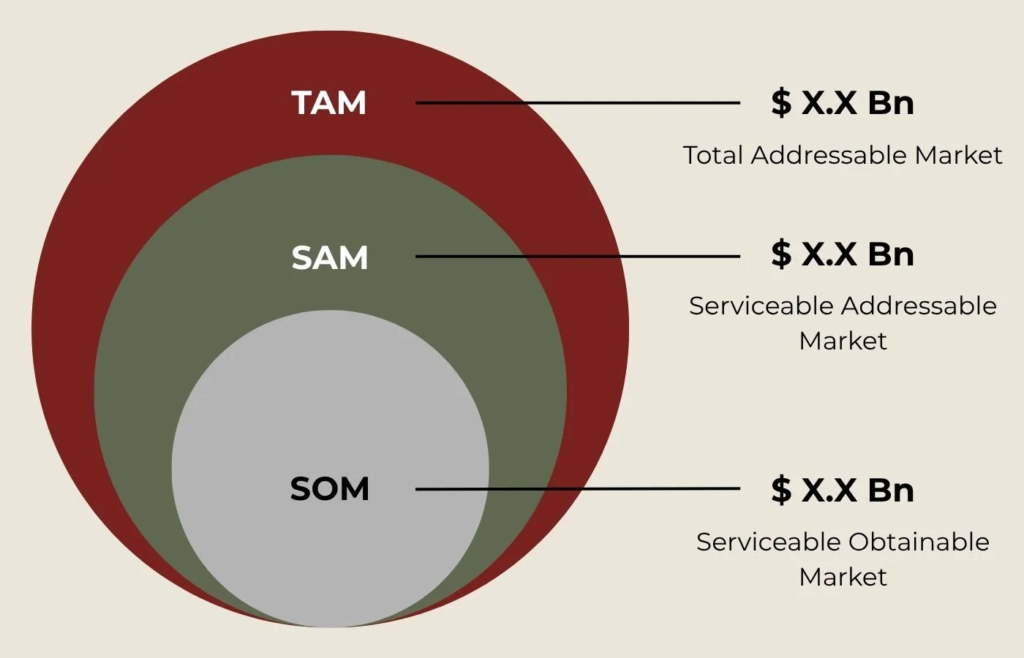
7. How big is the market that you can serve today
Show SOM today, then the step-up path. If you want a quick primer on TAM → SAM → SOM, see Kadence: Market size explained.
8. Who exactly is your ICP and who is not your customer
Saying who you are not for adds credibility. If you are drafting your first ICP, this ICP guide is a practical template.
9. Why are alternatives not good enough
Contrast legacy assumptions with your native approach such as workflow, device, or regulatory fit.
4) Go to market, unit economics, and growth
10. What is your go to market
Start with the channel where payback works, then layer partnerships or sales.
11. Unit economics today versus post seed
Be honest about CAC now and show what changes with focus, channel mix, or pricing.
12. How will you get the first 1,000 paying customers
Founder led sales, two scalable channels, and one partner motion is a classic seed mix.
5) Competition, moat, and risk
13. Who are competitors and how do you win
Name them clearly, show your wedge, then show retention or margin advantage.
14. What is defensibility beyond moving fast
Workflow lock-in, data network effects, or channel exclusivity. For angle ideas beyond “move fast,” this moats primer is useful.
15. Key risks and how you will de-risk each
Pick two real risks and one concrete mitigation per risk.
6) Pricing, learning, and planning
16. What is your business model and pricing
Keep it simple such as SaaS plus usage or a transaction take rate with a gross margin path.
17. What did you learn from failed experiments or churn
Kill list plus lesson plus what you doubled down on.
18. How will you use the seed funds
An 18 month plan with a split across product, GTM, and infra plus milestone metrics.
7) Team, hiring, domain experience, future rounds, and valuation
19. Why this team and how are the founders complementary
Show founder market fit and founder role fit. Explain complementary strengths such as product plus distribution or domain plus growth. Mention where you have shipped together.
20. What is the plan to build the team over the next 12 months
Name the next three critical hires, why they matter, and how you will source them.
21. What is your experience in this specific domain and how does it change your roadmap
Tie experience to unique insight, faster customer learning, or better risk handling.
22. How will you raise future rounds and what milestones unlock Series A
Give a clear bar such as MRR, growth rate, payback, gross margin, and channel engines. Explain how seed capital gets you there.
23. How did you arrive at valuation for this round
Be transparent about references such as comparable seed rounds in India, revenue or engagement baselines, quality of pipeline, and risk profile. If you are pre revenue, anchor on progress such as activation, retention, pilots, and team strength. Explain ownership targets and runway needs.
24. What is your biggest unknown today and how are you testing it
Name one unknown and the exact experiment with a stop loss.
25. If we do not invest, what happens
We keep shipping. Show runway and momentum. The round accelerates a specific lever, not survival.
Pre seed vs seed India in a common investor questions seed round
Pre seed proves problem and ICP clarity with a prototype and early usage such as 50 to 200 users, a few LOIs or pilots, and strong team completeness. Seed expects early product market signals such as activation and retention, some revenue or paid pilots, a credible CAC payback path, and a plan to ₹X MRR within 12 to 18 months of runway. Even at pre seed, show a visible pipeline and learning velocity such as experiments that lead to changes.
Your investor readiness checklist for the data room
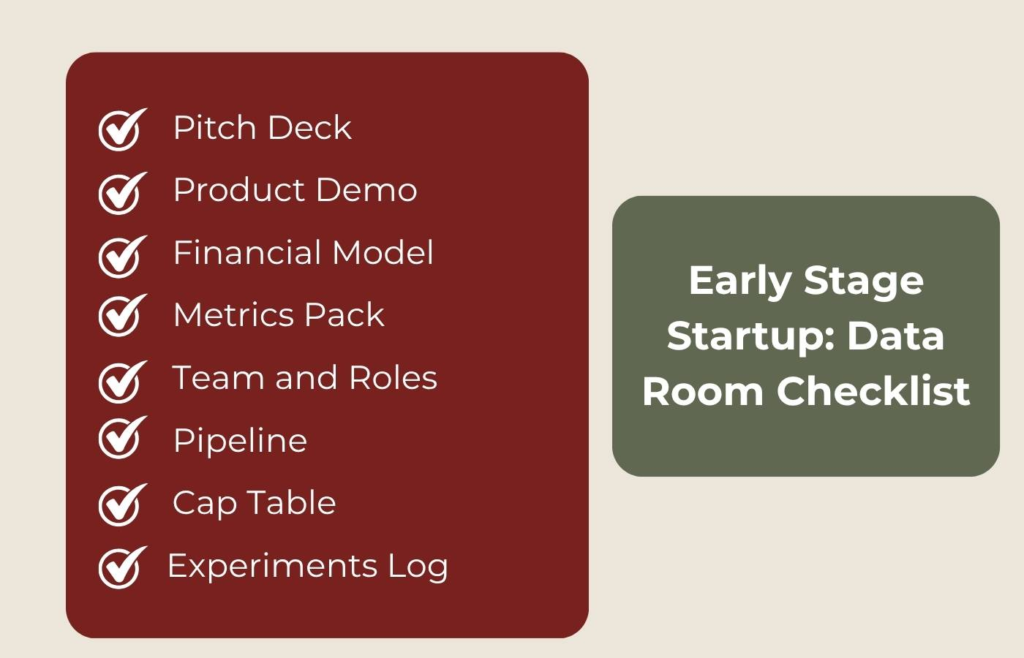
- Story and deck with 10 to 12 slides: Problem, Why now, Solution, ICP, Traction, Market, GTM, Business model, Competition or Moat, Team, Plan and Use of funds
- Product Demo: If a product company, a demo of how the product works, highlighting its MOAT
- Metrics pack with MAU or WAU, activation, retention cohorts, conversion, CAC or payback, gross margin, funnel snapshots
- Experiments log showing what you tried, what changed, and what you are shipping next
- Pipeline with pilots or LOIs and a top 20 accounts table with stage and next action
- Security or compliance note if you are B2B, health, or fin
- Hiring plan for the next three critical roles and why
- Financial model with an 18 month plan, three scenarios, runway, and key assumptions
- Cap table and ESOP clean and current
How to answer common investor questions seed round with calm confidence
- Keep answers short and lead with evidence.
- Admit gaps and show the test you are running.
- Invite diligence such as happy to share the cohort workbook after this call.
- Land every answer with momentum such as the next build, test, or milestone.
Get investor ready
Create the perfect pitch deck for investors
If you want help pressure testing your answers to the common investor questions seed round, I can work with you to sharpen the story, craft a tight 10 to 12 slide deck, and rehearse Q and A until it feels natural.
FAQs
Quick answers to the questions founders ask most during a common investor questions seed round.
A. A crisp 10 to 12 slide deck, a metrics one pager, a cohort workbook, a pipeline list, a brief security or compliance note, a hiring plan, a financial model for 18 months with three scenarios, a clean cap table, and your 12 to 18 month plan.
A. Directionally accurate with clear assumptions and a path to CAC payback and gross margin improvement. A base, conservative, and upside case helps investors understand your levers.
A. Share the anchors you used such as comparable seed rounds in India, current traction, quality of pipeline, and risk profile. Explain why the ownership and runway you seek set you up to reach Series A milestones.
A. Lead with retention, activation, and paid intent proxies such as paid POCs, pilots, and waitlists. Then show a believable path to the first ₹1 to 5 lakh MRR with your seed plan.
A. Name competitors clearly. State where you lose or win, your wedge, and why your distribution or data flywheel compounds. Tie it to retention or unit economics.
A. Complementary strengths across product, engineering, and distribution. Domain experience that changes your roadmap quality and risk handling. A clear hiring plan for the next three roles.